The Story of Fentress County
Two thousand feet up. A hundred miles from nowhere. And exactly where we want to be.
A County Carved from the Plateau
Fentress County was carved from Morgan, Overton, and White counties on November 28, 1823 — named for James Fentress, Speaker of the Tennessee House of Representatives. Its county seat, Jamestown, was established five years later in 1828, originally called "Sand Springs" for the natural springs that bubble through the sandy soil.
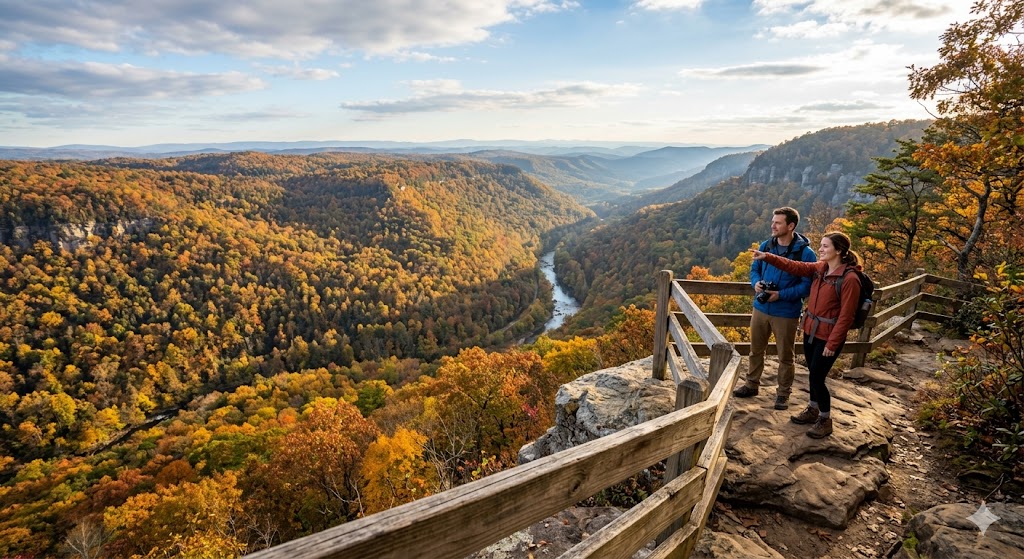
From the beginning, this was a place apart. The Cumberland Plateau rises 2,000 feet above the surrounding valleys — a vast tableland of hardwood forests, sandstone gorges, and cold-water streams that has always attracted people looking for something different.
Early settlers were a mix of Scotch-Irish pioneers pushing west through the Cumberland Gap, German immigrants who established the community of Allardt in the 1880s, and families who had been on the plateau for generations before anyone thought to draw county lines.
A Landscape That Demands Something From You
The plateau is not gentle. It is a high, hard place of thin soil and long winters, of steep hollows and rock-outcrop ridges.
Big South Fork
125,000 acres of protected wilderness. No roads through the gorge. 800,000+ visitors a year for hiking, horseback riding, and paddling.
Dale Hollow Lake
27,700 acres of crystal-clear water kept deliberately wild. World record smallmouth bass — 11 lbs 15 oz.
The Plateau Itself
2,000 ft elevation. Thin soil, long winters, and a landscape that hasn't been tamed. This is what preserved everything worth coming here for.
Unionists, Immigrants & a War Hero
Fentress County's history is a story of independence, resilience, and remarkable individuals who shaped the nation from this small plateau county.
1861 — Voted Against Secession
651–128 against leaving the Union. One of the most pro-Union counties in Tennessee. A no-man's land of bushwhackers and Union scouts throughout the Civil War.
1880s — Allardt Founded
Bruno Gernt, a German immigrant, founded Allardt and recruited European settlers to farm the plateau. German and Scandinavian influence still visible today.
1918 — Sgt. Alvin C. York
Born in Pall Mall. Captured 132 German soldiers single-handedly. Medal of Honor. Turned down fame to come home and build a school — York Institute, still operating today.
John M. Clemens
Father of Mark Twain served as postmaster at Pall Mall in the 1830s. Young Sam Clemens likely heard stories on this plateau that later appeared in his books.
What the Plateau Looks Like Now
Fentress County today is one of Tennessee's most sought-after destinations for remote workers, retirees, and families looking to escape the cities — while still holding onto everything that made it special.
Affordable Living
Median home value ~$249,400. Property taxes ~$400/year on a $100K home — 93rd lowest of 95 Tennessee counties.
York Institute
The only state-operated high school in America. Founded by Sgt. York in 1926. Still educating students from across the county.
Outdoor Recreation
World-class hiking, fishing, hunting, and paddling. No chain hotels. No traffic lights on the main highway. No Starbucks.
Growing Connectivity
Remote work has made the plateau accessible. Fiber internet expanding. Roane State's new $25M campus now open in Jamestown.
A Place That Chooses Its People
Fentress County is not for everyone. It is not convenient. It is not on the way to anywhere. The winters are long, the grocery store is 35 minutes from some communities, and the nearest hospital is an hour away. But for the people who choose it — whether their families have been here for two centuries or two years — there is no place else quite like it.
You come here on purpose. And most people who do — come back.
Interested in the Plateau?
Whether you're just curious or ready to start looking, we'd love to answer your questions about life on the Cumberland Plateau.
Get Area Info
Send us a message and we'll be in touch within 24 hours.